Master the Wave: Beginner’s Guide to Indoor Surfing
Disclosure: This post may contain affiliate links, meaning we get a commission if you decide to make a purchase through our links, at no extra cost to you. #ad
So… indoor surfing? Yep, it’s a thing—and it’s way more accessible (and beginner-friendly) than most people think. If you’ve ever dreamed of riding a wave but didn’t exactly want to start by wiping out in the ocean, FlowRider-style indoor surfing might be your new obsession.
And no, you don’t have to be in California or near a beach town. You just need water, a moving wave, and a little balance. Let’s get into it.
What is Flowboarding, Anyway?
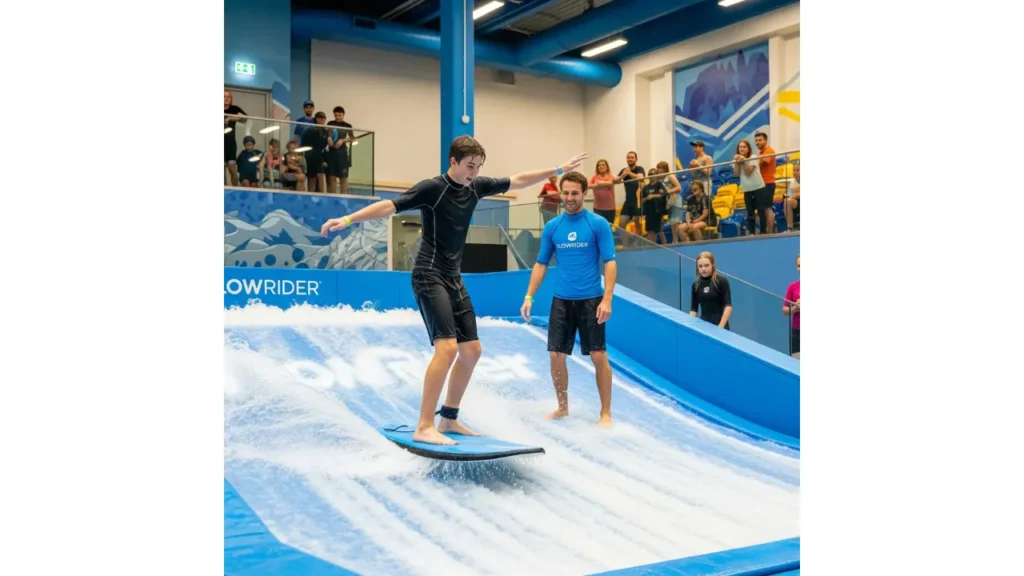
Flowboarding (also called FlowRider surfing) is the indoor version of surfing or bodyboarding on a continuous, simulated wave. Think of it like a giant treadmill for water. A powerful jet shoots water across a soft, sloped surface, creating a never-ending wave that you can ride standing or lying down.
The best part? It’s happening indoors. No sharks, no cold water, no weird seaweed surprises.
Can You Really Learn to Surf Indoors?
Short answer: yes.
Indoor surfing is not just for experts. Most indoor surf parks offer beginner lessons—and the learning curve is way less intimidating than ocean surfing.
Trained instructors help you figure out where to place your feet, how to fall safely, and how to start balancing. Expect to fall a few times, but also to laugh a lot.
Indoor Surfing for Kids and Nervous Grown-Ups
Kids usually pick it up fast. Many parks offer shorter, kid-friendly sessions or indoor bodyboarding for ages as young as 5. For adults, if you’re nervous, go during non-peak times. Everyone falls—literally everyone.
Planning a Birthday or Group Event?
An indoor surfing birthday party is a hit. Private rentals often include a few hours of wave time, snacks, and a party room. It’s high-energy, hilarious, and more memorable than a trampoline park or arcade.
What’s It Cost?
The cost of an indoor surfing lesson varies, but here’s a general idea:
First-time group lessons: $35–$60 for 30–60 minutes
Private session: $75–$150+
All-day passes: $100+
Some parks also offer punch cards or memberships.
FlowRider Workout? Yes, It’s a Thing
Flowboarding works your core, legs, back, and balance—all while you’re having fun. Bonus: You’re barefoot and smiling the whole time.
Safety First: Is Indoor Surfing Safe?
Indoor surfing is generally very safe. The surface is soft, and instructors teach you how to fall properly. Helmets are usually optional but available.
Where to Find the Best Indoor Surfing Parks
Search “best indoor surfing parks near me” or “FlowRider parks” plus your city or state. Common places include:
Kalahari Resorts (multiple states)
American Dream Mall (NJ)
Typhoon Texas (TX)
Local surf parks or gyms with FlowRiders
Tips Before You Go
Wear tight-fitting swimwear
Arrive early to sign waivers and watch the safety video
Don’t overthink it—just try it
Surf’s Up Dude
You don’t need to live near an ocean to learn to surf. Indoor surfing is fun, beginner-friendly, and a full-body workout. Try it once—you’ll be hooked.